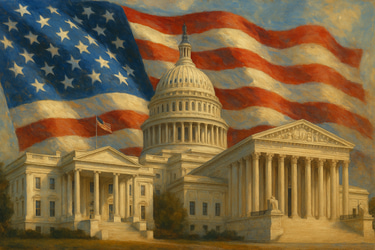
Yes, Congress Can Write Election Laws
Concerning Article I, Section 4, Clause 1
Steven A. Carlson
6 min read
Was America Built on the Back of Slavery? Yes and No - Part 1
Was America Built on the Back of Slavery? Yes and No - Part 2
To see a list of all commentaries, click the above picture.


Can Men Get Pregnant? - Part 1
Is it Nationalism or Patriotism?
The U.S. Constitution provides the fundamental legal framework by which this country is to be governed. It is the scale by which laws and law making are to be measured. The design of our government is spelled out in the Constitution and it is this document that purportedly controls governmental actions.
Furthermore, in the 10th Amendment, the Founders made the point that governmental activity was to be limited to the authority delegated to the federal government by the Constitution. In other words, Congress was not to cross that constitutional line and write laws that fell outside the governmental limits established in that document.
One of the items that the Constitution recognizes as a responsibility and duty that falls to the states is the planning and execution of the American election process. This state responsibility/prerogative is spelled out explicitly in Article I, Section 4, Clause 1, where is written: "The Times, Places and Manner of holding Elections shall be prescribed in each State by the Legislature thereof.”
This language is pretty straightforward. It is clear that states are responsible for determining the “Times, Places, and Manner of holding Elections.” The clause does not distinguish between elections for federal offices or elections for state and local offices. Those responsibilities clearly fall to the states.
Over the past several years much has been said about the integrity of elections and, given questionable practices in several states including Georgia, Pennsylvania, Michigan, and others, there is arguably a good case to be made that those practices need to be addressed since they very well could impact the outcome of those elections, particularly in jurisdictions where only a few thousand votes are being cast for a local office. A discrepancy of 100 votes might decide which candidate wins.
President Trump and others have voiced serious concerns about the practices and discrepancies that have surfaced over the past few years. The president has even approached Congress, asking them to address those issues through federal legislation. Some suggestions have included legislation that requires proof of citizenship when registering to vote and voter identification when a person casts a ballot. The SAVE Act, which is currently being considered by the legislature, is meant to address these issues.
However, the SAVE Act and other possible election-related legislation by Congress have been met with stern opposition. The resounding cry has been that the U.S. Constitution (Article I, Section 4, Clause 1) clearly places the responsibility for oversight, planning, and execution of elections in the hands of the states. Consequently, Congress cannot, as the president has suggested, force that kind of federal legislation upon the states. Really? Is that what the Constitution says?
One of the challenges we face in America is that too often people want Congress to act when Congress does not have the authority to act and they want Congress to abstain when the Constitution clearly places responsibility in the hands of the legislature. This is often accomplished by misapplying the Constitution or, more often, reading only part of what the Constitution has to say. Where election legislation is concerned, it is this latter practice that applies. It is a matter of only reading part of what this particular clause has to say and ignoring the balance of the statement. In full, the clause reads as follows:
The Times, Places and Manner of holding Elections for Senators and Representatives, shall be prescribed in each State by the Legislature thereof; but the Congress may at any time by Law make or alter such Regulations, except as to the Places of chusing Senators.
With respect to the exclusion of Senate races, it is important to note that at the time this clause was written, Senators were not chosen in public elections. Each Senator was appointed by the legislative chambers in the state that Senator was selected to represent. When the 17th Amendment was ratified in 1913, Senators were no longer selected by a state’s legislators. They would now be part of the general election process, effectively removing that limitation from the clause.
Those who insist that Congress has no constitutional authority to write federal laws concerning elections have surreptitiously ignored that portion of this clause that specifically and unambiguously authorizes Congress to pass federal legislation with respect to elections in America. In fact, while the clause authorizes states to determine the times, places, and manner for holding elections, Congress is not forbidden to address those issues. Indeed, the clause states that “Congress may at any time by Law make or alter such Regulations.” The words “such Regulations” refers specifically to “The Times, Places, and Manner of holding elections.” This must be the point of the phrase “such Regulations” since these are the only regulations mentioned in this setting.
Does Congress have constitutional license to write election laws, overriding the practices of the states? Indeed, according to the Constitution, “Congress may at any time by Law make or alter such Regulations.” Were Congress to write laws concerning elections, it is difficult to see how the Supreme Court could circumvent some of the plainest language in the Constitution.
Why did the Founders authorize Congress to overrule states when it comes to something that is also designated to the states? Suffice it to say that those who wrote the Constitution had experience with elections. They knew that, left to their own devices, men tend to do what most benefits them, and elections are too important and too easily manipulated to go unsupervised. This balance was intended to ensure both state flexibility and federal oversight, which are essential in maintaining fair and equitable elections across the nation.
The wording of Article I, Section 4, Clause 1, of the U.S. Constitution is unmistakable. It affirms that Congress does, indeed, have constitutional authority to enact laws impacting elections – even to the point of superseding state laws. This authority empowers Congress to institute federal standards to address and rectify possible issues within the states’ electoral framework, reinforcing the integrity of American elections.
Navigating the Second Amendment
Birthright Citizenship - Digging into the Fourteenth Amendment


What About Greenland?
Policy v Politics
Socialism v Fascism
Free Speech - Rights and Responsibilities
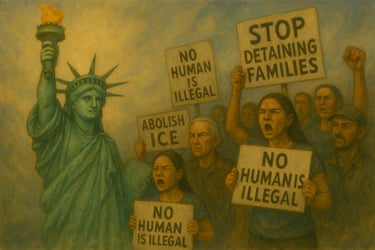
Reconciling Immigration and the U.S. Constitution - Part 2
Reconciling Immigration and the U.S. Constitution - Part 1
See below for contact information
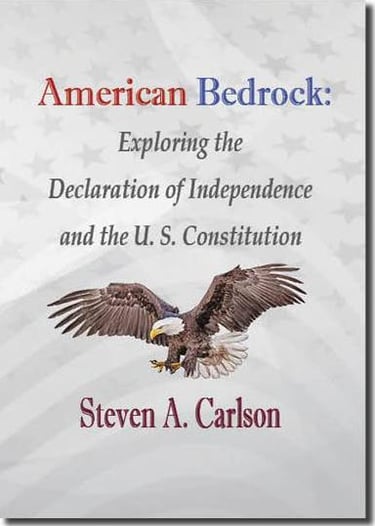
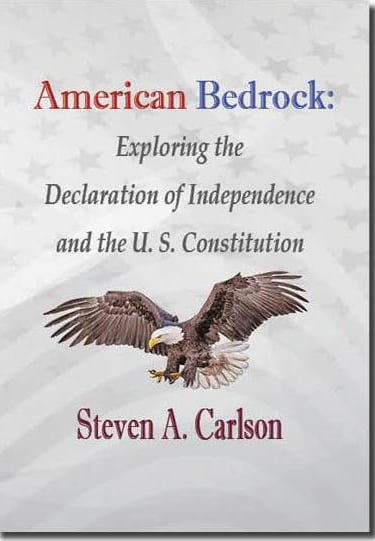
This book will truly enhance your understanding of the Declaration of Independence and the United States Constitution. Click the button below to check it out.
___________________________________________________________________________________________________________________________________________________________________________________________________


Contact
Questions? Reach out anytime.
Email:
contact@constitutionmatters.net
© 2025. All rights reserved.