Separation of Church and State - Part 1
Considering the communique between the Danbury Baptist Association and Thomas Jefferson
Steven A. Carlson
6 min read
To see a list of all commentaries, click the above picture.
Proof of Citizenship and the American Voter
Yes, Congress Can Write Election Laws
Was America Built on the Back of Slavery? Yes and No - Part 1
Was America Built on the Back of Slavery? Yes and No - Part 2
Adjusting to Religious Life in America
One cannot read much about politics in America without encountering the phrase Separation of Church and State. The terminology is generally employed as a deterrent against church influence in American politics. The claim is that this constitutional principle is intended to protect society in general from excessive religious influence when it comes to government actions and decisions.
Many who read this article will be surprised to learn that the phrase Separation of Church and State does not appear in the U.S. Constitution. In fact, the principle of the separation between these two entities is generally misconstrued. This begs the dual question: Where did this terminology originate and what does it actually mean?
The late 18th and early 19th centuries in America were characterized by a struggle over religious interpretation and authority. The Danbury Baptist Association, founded in 1790, advanced in notoriety as they defended religious freedom in early 19th-century America amid what could be seen as persecution of certain denominations. Formed primarily by a group of Baptist congregations in Connecticut, the association played a vital role in advocating for the principles of religious liberty grounded in a plain reading of the First Amendment. Exactly what does the First Amendment say concerning faith and worship? It reads as follows:
Congress shall make no law respecting an establishment of religion, or prohibiting the free exercise thereof; or abridging the freedom of speech, or of the press; or the right of the people peaceably to assemble, and to petition the Government for a redress of grievances.
It is, of course, the first clause that establishes the right of individuals to worship without government interference. Relying on this wording in the amendment, the Danbury Baptist Association was instrumental in seeking to clarify the relationship between the government and the church, using their platform to voice concerns about outside pressure where their faith and worship were concerned.
While the First Amendment, ratified in 1791, ostensibly guaranteed freedom of religion, many Baptist congregations still faced pressure from more established denominations, particularly Congregationalists and Anglicans, who dominated certain regions in the newly formed United States of America. These larger denominations, transported from England, often challenged the smaller, less established denominations, attempting to force them into doctrinal conformity. Baptists, who naturally valued their autonomy and the right to worship as they saw fit, often found themselves marginalized and targeted for their beliefs.
Despite the words of the First Amendment, Baptists and others remembered what they had experienced in England not so long ago. Prior to moving to America, the Anglican Church (a.k.a., Church of England) enjoyed strong support from the English government, practically serving as an arm of that government; so they seemed to presume that governmental authority would still favor them in the new world. This is exactly what Baptists had experienced in England. Consequently, there was concern about the relationship between the government and religious organizations like the Anglican Church. There was disquieting unease that the federal government, as in England, might provide support for certain denominations, which seemed contrary to a reading of the First Amendment.
The Danbury Baptist Association Inquiry
Given what they saw as a troubling issue, in late 1801 the Danbury Baptist Association sent a letter to then President Thomas Jefferson, expressing their concerns about the government’s potential involvement when it came to influencing religious practices in America. This correspondence serves as a significant historical milestone in the discourse surrounding the relationship between church and State in the United States. The letter articulated the church’s apprehension that the federal government might encroach upon their religious freedoms, which was a matter of considerable importance to the Baptist community in Connecticut. Since it is something that very few have ever read, and in order to quell misunderstandings and misinformed claims, below is the entirety of the letter as written from the Association to President Jefferson.
Sir,
Among the many millions in America and Europe who rejoice in your Election to office; we embrace the first opportunity which we have enjoy’d in our collective capacity, since your Inauguration, to express our great satisfaction, in your appointment to the chief Magistracy in the United States: And though our mode of expression may be less courtly and pompious than what many others clothe their addresses with, we beg you, Sir to believe, that none are more sincere.
Our Sentiments are uniformly on the side of Religious Liberty—That Religion is at all times and places a Matter between God and Individuals—That no man aught to suffer in Name, person or effects on account of his religious Opinions—That the legetimate Power of civil Goverment extends no further than to punish the man who works ill to his neighbour: But Sir, our constitution of goverment is not specific. Our antient charter, together with the Laws made coincident therewith, were adopted as the Basis of our goverment, At the time of our revolution; and such had been our Laws & usages, & such still are; that religion is consider’d as the first object of Legislation; & therefore what religious privileges we enjoy (as a minor part of the State) we enjoy as favors granted, and not as inalienable rights: and these favors we receive at the expence of such degrading acknowledgements as are inconsistant with the rights of freemen. It is not to be wondred at therefore; if those, who seek after power & gain under the pretence of goverment & Religion should reproach their fellow men—should reproach their chief Magistrate, as an enemy of religion Law & good order because he will not, dares not assume the prerogative of Jehovah and make Laws to govern the Kingdom of Christ.
Sir, we are sensible that the President of the united States, is not the national Legislator, & also sensible that the national goverment cannot destroy the Laws of each State; but our hopes are strong that the sentiments of our beloved President, which have had such genial Effect already, like the radiant beams of the Sun, will shine & prevail through all these States and all the world till Hierarchy and tyranny be destroyed from the Earth. Sir when we reflect on your past services, and see a glow of philanthropy and good will shining forth in a course of more than thirty years we have reason to believe that America’s God has raised you up to fill the chair of State out of that good will which he bears to the Millions which you preside over. May God strengthen you for the arduous task which providence & the voice of the people have cal’d you to sustain and support you in your Administration against all the predetermin’d opposition of those who wish to rise to wealth & importance on the poverty and subjection of the people
And may the Lord preserve you safe from every evil and bring you at last to his Heavenly Kingdom throug Jesus Christ our Glorious Mediator.
Signed in behalf of the Association
Nehh. Dodge
Ephm. Robbins
Stephen S Nelson [1]
The Committee
The primary concern highlighted in this letter was the fear of government interference in the practice of religion. The Danbury Baptists sought assurance from President Jefferson that the government would, in accord with the First Amendment, avoid breaching that line of separation between constitutional government functions and the affairs of religious organizations. They were concerned that a government crossing that line could end up impacting their right to worship freely. The inquiry not only reflected their anticipation of federal action—particularly in light of the religious dynamics of the time—but also underscored their desire for the safeguarding of individual liberties as guaranteed by the Constitution.
The tone of the letter was respectful yet firm as the Association sought to strike a balance between expressing their concerns and honoring the elected official they were addressing. They entreated President Jefferson to uphold the principles of religious freedom and maintain a government that would neither favor nor discriminate against any religious group. This inquiry ultimately played a foundational role in shaping subsequent interpretations of the First Amendment and solidifying the concept of religious liberty in American society.
End Part 1
[1] Danbury Baptist Association to Thomas Jefferson, accessed February 13, 2026
See below for contact information
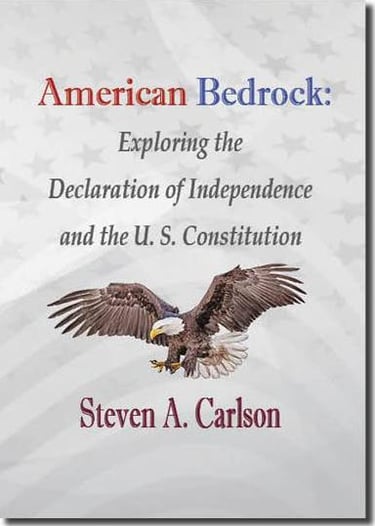
This book will truly enhance your understanding of the Declaration of Independence and the United States Constitution. Click the button below to check it out.
___________________________________________________________________________________________________________________________________________________________________________________________________


Contact
Questions? Reach out anytime.
Email:
contact@constitutionmatters.net
© 2025. All rights reserved.