Federal Limitations and States' Rights - Part 3
What the Constitution actually says about the role of the federal government
Steven A. Carlson
12 min read
Constitutional Limits and the Federal Government
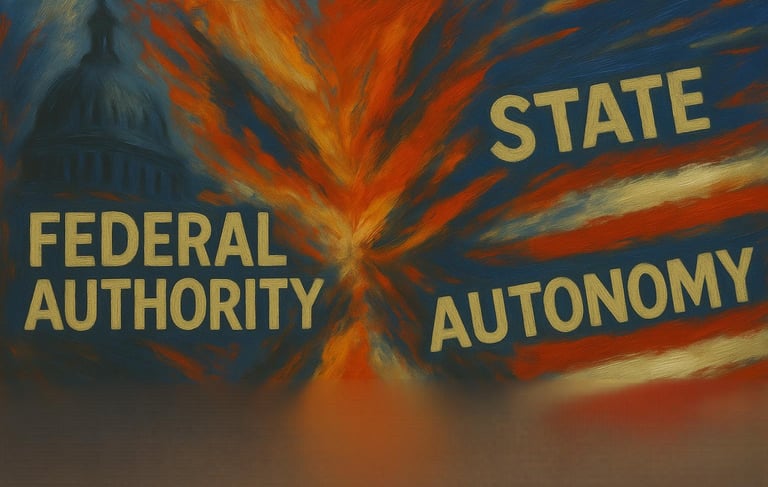
The U.S. Constitution establishes the foundational principles that limit federal powers. This founding document acts as a guiding document that specifically limits the scope of authority granted to the national government. The framers of the Constitution pictured a federal system that would safeguard the autonomy of individual states and, at the same time, ensure a capable federal governance structure.
A core principles embedded in the Constitution is the concept of enumerated powers, reflected in Article I, Section 8. The framers specifically outlined the powers available to Congress. This includes things like the authority to levy taxes, regulate commerce, and provide for the common defense. This enumerative approach is crucial in defining the boundaries of federal jurisdiction, as it implicitly restricts the government's actions to those expressly permitted within the document.
The 10th Amendment, ratified in 1791 as part of the Bill of Rights, was written to placate those like Thomas Jefferson and Patrick Henry who were anxious about the consequences of a federal government that wielded too much power. This amendment purportedly reinforced the limits placed on federal authority. It clearly stipulates that powers not delegated to the United States by the Constitution, nor prohibited by it to the states, are reserved to the states or the people. This amendment epitomizes the framers' intent to prevent an overreach of federal authority, allowing states to maintain substantial control over their own affairs.
While the Supremacy Clause, located in Article VI, establishes that federal laws take precedence over state laws in cases of conflict, this does not grant the federal government unlimited power. The intent was that federal authority would be confined to those areas explicitly addressed by the Constitution. Thus, while the Constitution provides the federal government with necessary authority, it simultaneously establishes a framework designed to protect state sovereignty.
The U.S. Constitution Authorizes the Federal Government to…
The form of the U.S. federal government is established in the Articles of the Constitution. It is there that two branches of congress, the executive branch, and the judicial branch are defined. In fact, a clear majority of the Articles are spent creating that form of government and establishing the internal processes for each branch as well as their interaction with each other. Actually, the Articles have far less to say about the authority granted to the federal government and much of that occurs in Article I, Section 8, although other articles do touch on the subject.
One wonders, if the Constitution delineates federal authority and responsibilities, exactly what areas are specifically recognized as falling under that federal umbrella? In fact, the Constitution enumerates as little authority as possible to the federal government. That is in keeping with the words of James Madison from Federalist14, which was cited in Part 1 of this series. However, since it has been a while, it seems reasonable to remind the reader of those words.
the general government is not to be burdened with the totality of powers for creating and enforcing laws. Its jurisdiction is confined to specific, enumerated objects that pertain to all members of the republic, but cannot be addressed by the individual provisions of any. The subordinate governments, which can extend their jurisdiction to the other subjects that they can individually manage, will retain their appropriate authority and operations.[1]
The intent of the framers was to establish a federal government that would, as much as possible, stay in its lane, leaving daily governing to the individual states. What, then, constitutes that federal lane? Following is a list of Articles/Sections/Clauses that specifically define those actions that can or must fall upon the shoulders of the federal government. The list is formidable, but it seemed better to quote these items rather than allowing something to be lost in interpretation. If there is something missing, it is not intentional. However, it seems important for citizens to fully understand what the framers expected the federal government to look like. Judge for yourself whether the federal government has exceeded its constitutional authority over the past 250 years.
Article I
Section 3
Clause 6: The Senate shall have the sole Power to try all Impeachments. When sitting for that Purpose, they shall be on Oath or Affirmation. When the President of the United States is tried, the Chief Justice shall preside: And no Person shall be convicted without the Concurrence of two thirds of the Members present.
Section 4
Clause 1: The Times, Places and Manner of holding Elections for Senators and Representatives, shall be prescribed in each State by the Legislature thereof; but the Congress may at any time by Law make or alter such Regulations, except as to the Places of chusing Senators.
Section 5
Clause 1: Each House shall be the Judge of the Elections, Returns and Qualifications of its own Members, and a Majority of each shall constitute a Quorum to do Business; but a smaller Number may adjourn from day to day, and may be authorized to compel the Attendance of absent Members, in such Manner, and under such Penalties as each House may provide.
Section 7
Clause 1: All Bills for raising Revenue shall originate in the House of Representatives; but the Senate may propose or concur with Amendments as on other Bills.
Section 8
Clause 1: The Congress shall have Power To lay and collect Taxes, Duties, Imposts and Excises, to pay the Debts and provide for the common Defence and general Welfare of the United States; but all Duties, Imposts and Excises shall be uniform throughout the United States;
Clause 2: To borrow Money on the credit of the United States;
Clause 3: To regulate Commerce with foreign Nations, and among the several States, and with the Indian Tribes
Clause 4: To establish an uniform Rule of Naturalization, and uniform Laws on the subject of Bankruptcies throughout the United States;
Clause 5: To coin Money, regulate the Value thereof, and of foreign Coin, and fix the Standard of Weights and Measures.
Clause 6: To provide for the Punishment of counterfeiting the Securities and current Coin of the United States
Clause 7: To establish Post Offices and post Roads
Clause 8: To promote the Progress of Science and useful Arts, by securing for limited Times to Authors and Inventors the exclusive Right to their respective Writings and Discoveries
Clause 9: To constitute Tribunals inferior to the supreme Court
Clause 10: To define and punish Piracies and Felonies committed on the high Seas, and Offences against the Law of Nations
Clause 11: To declare War, grant Letters of Marque and Reprisal, and make Rules concerning Captures on Land and Water
Clause 12: To raise and support Armies, but no Appropriation of Money to that Use shall be for a longer Term than two Years
Clause 13: To provide and maintain a Navy
Clause 14: To make Rules for the Government and Regulation of the land and naval Forces
Clause 15: To provide for calling forth the Militia to execute the Laws of the Union, suppress Insurrections and repel Invasions
Clause 16: To provide for organizing, arming, and disciplining, the Militia, and for governing such Part of them as may be employed in the Service of the United States, reserving to the States respectively, the Appointment of the Officers, and the Authority of training the Militia according to the discipline prescribed by Congress
Clause 17: To exercise exclusive Legislation in all Cases whatsoever, over such District (not exceeding ten Miles square) as may, by Cession of particular States, and the Acceptance of Congress, become the Seat of Government of the United States, and to exercise like Authority over all Places purchased by the Consent of the Legislature of the State in which the Same shall be, for the Erection of Forts, Magazines, Arsenals, dock-Yards, and other needful Buildings;–And
Clause 18: To make all Laws which shall be necessary and proper for carrying into Execution the foregoing Powers, and all other Powers vested by this Constitution in the Government of the United States, or in any Department or Officer thereof
Section 9
Clause 1: The Migration or Importation of such Persons as any of the States now existing shall think proper to admit, shall not be prohibited by the Congress prior to the Year one thousand eight hundred and eight, but a Tax or duty may be imposed on such Importation, not exceeding ten dollars for each Person
Clause 2: The Privilege of the Writ of Habeas Corpus shall not be suspended, unless when in Cases of Rebellion or Invasion the public Safety may require it
Clause 4: No Capitation, or other direct, Tax shall be laid, unless in Proportion to the Census or enumeration herein before directed to be taken
Clause 7: No Money shall be drawn from the Treasury, but in Consequence of Appropriations made by Law; and a regular Statement and Account of the Receipts and Expenditures of all public Money shall be published from time to time
Section 10
Clause 2: No State shall, without the Consent of the Congress, lay any Imposts or Duties on Imports or Exports, except what may be absolutely necessary for executing it's inspection Laws: and the net Produce of all Duties and Imposts, laid by any State on Imports or Exports, shall be for the Use of the Treasury of the United States; and all such Laws shall be subject to the Revision and Controul of the Congress.
Clause 3: No State shall, without the Consent of Congress, lay any Duty of Tonnage, keep Troops, or Ships of War in time of Peace, enter into any Agreement or Compact with another State, or with a foreign Power, or engage in War, unless actually invaded, or in such imminent Danger as will not admit of delay
Article II
Section 1
Clause 3: The Electors shall meet in their respective States, and vote by Ballot for two Persons, of whom one at least shall not be an Inhabitant of the same State with themselves. And they shall make a List of all the Persons voted for, and of the Number of Votes for each; which List they shall sign and certify, and transmit sealed to the Seat of the Government of the United States, directed to the President of the Senate. The President of the Senate shall, in the Presence of the Senate and House of Representatives, open all the Certificates, and the Votes shall then be counted. The Person having the greatest Number of Votes shall be the President, if such Number be a Majority of the whole Number of Electors appointed; and if there be more than one who have such Majority, and have an equal Number of Votes, then the House of Representatives shall immediately chuse by Ballot one of them for President; and if no Person have a Majority, then from the five highest on the List the said House shall in like Manner chuse the President. But in chusing the President, the Votes shall be taken by States, the Representation from each State having one Vote; A quorum for this Purpose shall consist of a Member or Members from two thirds of the States, and a Majority of all the States shall be necessary to a Choice. In every Case, after the Choice of the President, the Person having the greatest Number of Votes of the Electors shall be the Vice President. But if there should remain two or more who have equal Votes, the Senate shall chuse from them by Ballot the Vice President.
Clause 4: The Congress may determine the Time of chusing the Electors, and the Day on which they shall give their Votes; which Day shall be the same throughout the United States
Clause 6: In Case of the Removal of the President from Office, or of his Death, Resignation, or Inability to discharge the Powers and Duties of the said Office, the Same shall devolve on the Vice President, and the Congress may by law provide for the Case of Removal, Death, Resignation or Inability, both of the President and Vice President, declaring what Officer shall then act as President, and such Officer shall act accordingly, until the Disability be removed, or a President shall be elected.
Section 2
Clause 1: The President shall be Commander in Chief of the Army and Navy of the United States, and of the Militia of the several States, when called into the actual Service of the United States; he may require the Opinion, in writing, of the principal Officer in each of the executive Departments, upon any Subject relating to the Duties of their respective Offices, and he shall have Power to grant Reprieves and Pardons for Offences against the United States, except in Cases of Impeachment.
Clause 2: He shall have Power, by and with the Advice and Consent of the Senate, to make Treaties, provided two thirds of the Senators present concur; and he shall nominate, and by and with the Advice and Consent of the Senate, shall appoint Ambassadors, other public Ministers and Consuls, Judges of the supreme Court, and all other Officers of the United States, whose Appointments are not herein otherwise provided for, and which shall be established by Law: but the Congress may by Law vest the Appointment of such inferior Officers, as they think proper, in the President alone, in the Courts of Law, or in the Heads of Departments.
Clause 3: The President shall have Power to fill up all Vacancies that may happen during the Recess of the Senate, by granting Commissions which shall expire at the End of their next Session
Section 3
Clause 1: He shall from time to time give to the Congress Information of the State of the Union, and recommend to their Consideration such Measures as he shall judge necessary and expedient; he may, on extraordinary Occasions, convene both Houses, or either of them, and in Case of Disagreement between them, with Respect to the Time of Adjournment, he may adjourn them to such Time as he shall think proper; he shall receive Ambassadors and other public Ministers; he shall take Care that the Laws be faithfully executed, and shall Commission all the Officers of the United States.
Article III
Section 2
Clause 1: The judicial Power shall extend to all Cases, in Law and Equity, arising under this Constitution, the Laws of the United States, and Treaties made, or which shall be made, under their Authority;—to all Cases affecting Ambassadors, other public Ministers and Consuls;—to all Cases of admiralty and maritime Jurisdiction;—to Controversies to which the United States shall be a Party;—to Controversies between two or more States;—between a State and Citizens of another State,—between Citizens of different States,—between Citizens of the same State claiming Lands under Grants of different States, and between a State, or the Citizens thereof, and foreign States, Citizens or Subjects.
Clause 2: In all Cases affecting Ambassadors, other public Ministers and Consuls, and those in which a State shall be Party, the supreme Court shall have original Jurisdiction. In all the other Cases before mentioned, the supreme Court shall have appellate Jurisdiction, both as to Law and Fact, with such Exceptions, and under such Regulations as the Congress shall make.
Clause 3: The Trial of all Crimes, except in Cases of Impeachment, shall be by Jury; and such Trial shall be held in the State where the said Crimes shall have been committed; but when not committed within any State, the Trial shall be at such Place or Places as the Congress may by Law have directed.
Section 3
Clause 2: The Congress shall have Power to declare the Punishment of Treason, but no Attainder of Treason shall work Corruption of Blood, or Forfeiture except during the Life of the Person attainted.
Article IV
Section 3
Clause 1: New States may be admitted by the Congress into this Union; but no new State shall be formed or erected within the Jurisdiction of any other State; nor any State be formed by the Junction of two or more States, or Parts of States, without the Consent of the Legislatures of the States concerned as well as of the Congress.
Clause 2: The Congress shall have Power to dispose of and make all needful Rules and Regulations respecting the Territory or other Property belonging to the United States; and nothing in this Constitution shall be so construed as to Prejudice any Claims of the United States, or of any particular State.
Section 4
Clause 1: The United States shall guarantee to every State in this Union a Republican Form of Government, and shall protect each of them against Invasion; and on Application of the Legislature, or of the Executive (when the Legislature cannot be convened) against domestic Violence.
Article V
Clause 1: The Congress, whenever two thirds of both Houses shall deem it necessary, shall propose Amendments to this Constitution, or, on the Application of the Legislatures of two thirds of the several States, shall call a Convention for proposing Amendments, which, in either Case, shall be valid to all Intents and Purposes, as Part of this Constitution, when ratified by the Legislatures of three fourths of the several States, or by Conventions in three fourths thereof, as the one or the other Mode of Ratification may be proposed by the Congress;
Article VI
Clause 1: All Debts contracted and Engagements entered into, before the Adoption of this Constitution, shall be as valid against the United States under this Constitution, as under the Confederation.
Clause 2: This Constitution, and the Laws of the United States which shall be made in Pursuance thereof; and all Treaties made, or which shall be made, under the Authority of the United States, shall be the supreme Law of the Land; and the Judges in every State shall be bound thereby, any Thing in the Constitution or Laws of any State to the Contrary notwithstanding.
________________________________
This list of Articles/Sections/Clauses characterizes the federal government as an entity that the framers saw as very limited where daily governance was concerned. In Part 4, a look back over time will provide a sense of how the U.S. arrived at a point where the federal government has expanded and overreached beyond anything James Madison could have imagined.
________________________
[1] Madison, James, Federalist 14.
See below for contact information
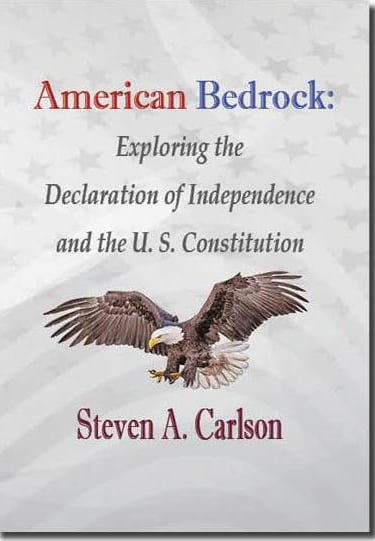
This book will truly enhance your understanding of the Declaration of Independence and the United States Constitution. Click the button below to check it out.
___________________________________________________________________________________________________________________________________________________________________________________________________


Contact
Questions? Reach out anytime.
Email:
contact@constitutionmatters.net
© 2025. All rights reserved.